What Are Etfs Versus Index Funds
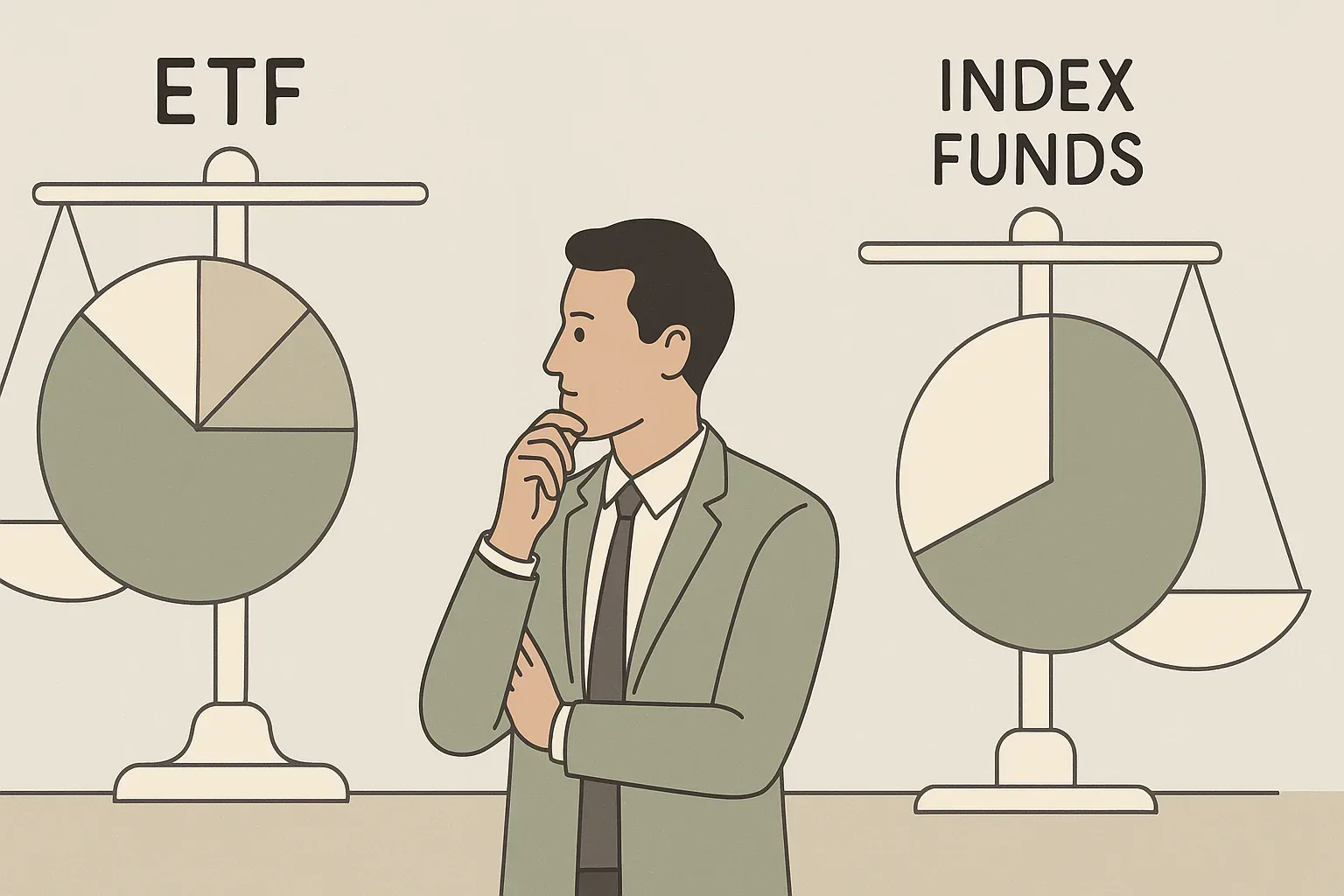
Investment decisions often feel overwhelming, especially when faced with terminology that seems deliberately complex. Among the most frequently confused investment vehicles are Exchange Traded Funds (ETFs) and index funds.
Understanding the Basics: What is an Index Fund?
An index fund is a type of mutual fund or Exchange Traded Fund (ETF) designed to track the performance of a specific market index. Instead of relying on a fund manager to pick individual stocks or bonds, an index fund simply aims to replicate the returns of its benchmark index. This means if you invest in an S&P 500 index fund, your investment will perform very similarly to the S&P 500 index itself. The core idea is passive investing, where the fund manager's role is not to outperform the market, but to match it as closely as possible, typically by holding all or a representative sample of the securities in the index. This strategy has proven remarkably effective over the long term, often outperforming actively managed funds as explored in the article Index Funds Still Beat Most Stock Pickers, Here's the Boring Reason Why. The underlying mechanism is simple: the fund buys and holds the same assets in the same proportions as the index it tracks. For instance, if the S&P 500 allocates 5% to Company A, the index fund will also allocate approximately 5% of its assets to Company A. This eliminates the need for expensive research and frequent trading, contributing to their generally lower fees. When the index rebalances, the fund adjusts its holdings accordingly, for example, as detailed in Rebalancing an Index Fund Portfolio. This passive approach works quietly against the higher costs and frequent turnover common in actively managed funds, as discussed in Why Actively Managed Funds Underperform.
Understanding the Basics: What is an Exchange Traded Fund (ETF)?
An Exchange Traded Fund (ETF) is a collection of securities, such as stocks, bonds, or commodities, that trades on stock exchanges, much like individual stocks. For example, there are ETFs that track the S&P 500, gold prices, specific country markets, or even niche industries like robotics or renewable energy. The key differentiator is their trading mechanism: unlike traditional mutual funds (many of which are index funds), ETFs can be bought and sold throughout the trading day at market-determined prices, which fluctuate based on supply and demand. This intra-day liquidity provides investors with flexibility akin to trading individual stocks. When you buy an ETF, you are purchasing shares of a fund that typically holds a diversified basket of assets, offering immediate diversification with a single transaction.
Key Distinctions: Structure, Trading, and Price Discovery
The fundamental differences in how ETFs and index funds are traded and priced stem directly from their structural forms. Traditional index funds are typically structured as open-end mutual funds. This means investors buy and sell shares directly from the fund company at the end of each trading day, based on the fund's Net Asset Value (NAV). The NAV is calculated once daily after the market closes, by summing the value of all assets in the fund and dividing by the number of outstanding shares. When you purchase mutual fund shares, new shares are created; when you sell, existing shares are redeemed. This direct transaction with the fund company at NAV ensures that you always buy and sell at the underlying value of the assets, eliminating intra-day price fluctuations from your concern. The number of outstanding shares in a mutual fund constantly changes as investors buy and sell.
In contrast, ETFs trade on stock exchanges throughout the day, just like company stocks. This means their price is determined by the forces of supply and demand among investors, which can cause their market price to deviate slightly from their underlying NAV during the trading day. If an ETF's market price rises significantly above its NAV, APs can buy the underlying securities, exchange them for ETF shares, and sell those shares on the open market for a profit, driving the ETF price back towards NAV. Conversely, if the ETF trades below NAV, APs can buy ETF shares, redeem them for the underlying securities, and sell those securities, again profiting and bringing the ETF price back in line.
Comparing Costs: Expense Ratios, Trading Fees, and Bid-Ask Spreads
Both investment vehicles are generally known for their low costs compared to actively managed funds, largely due to their passive investment strategies. However, the specific types of fees and how they are applied differ.
Expense Ratios: This is the primary cost for both. The expense ratio is an annual fee expressed as a percentage of your investment, charged by the fund company to cover management, administration, and operating expenses. For index-tracking vehicles, both traditional index mutual funds and index-tracking ETFs typically boast very low expense ratios, often below 0.10% or 0.20% per year. This is a significant advantage of passive investing over actively managed funds, which carry higher research and management costs.
Trading Fees/Commissions: Traditional index mutual funds often have no sales loads (front-end or back-end commissions) if bought directly from the fund company or through certain platforms. However, they may sometimes have minimum investment requirements, or transaction fees if traded through a brokerage that charges for mutual fund transactions. ETFs, because they trade like stocks, are subject to brokerage commissions each time you buy or sell shares. Many brokerage firms, however, now offer commission-free trading for a wide selection of ETFs, significantly reducing this cost for investors. For investors making regular, small contributions, commission-free ETFs or no-load index mutual funds are generally more cost effective.
Bid-Ask Spreads: This cost is unique to ETFs and is a consequence of their exchange-traded nature. When you buy an ETF, you typically pay the 'ask' price, and when you sell, you receive the 'bid' price. The difference between these two prices is the bid-ask spread. This spread represents a transaction cost that goes to market makers who facilitate trading. Wider spreads mean higher implicit trading costs.
Tax Efficiency: How Each Vehicle Handles Capital Gains
The tax efficiency of index funds versus ETFs presents a notable difference, particularly concerning capital gains distributions.
Traditional index mutual funds, like other mutual funds, can distribute capital gains to shareholders annually. This occurs when the fund sells securities at a profit within its portfolio, for reasons such as rebalancing the index or meeting investor redemptions. Even if you, the individual investor, haven't sold any of your fund shares, you could receive a capital gains distribution. These distributions are taxable in the year they are received, potentially creating an unexpected tax liability. This can be particularly frustrating for buy-and-hold investors who prefer to defer taxes until they decide to sell their investment. While these distributions are less common in passively managed index funds compared to actively managed ones due to lower turnover, they can still occur.
ETFs, on the other hand, are generally considered more tax-efficient, especially those that track broad market indexes. This superior tax efficiency primarily stems from their unique creation and redemption mechanism involving authorized participants (APs). When an AP redeems ETF shares, they typically exchange creation units for a basket of the fund's underlying securities, rather than cash. The ETF manager can strategically select which securities to give to the APs, often choosing those with the lowest cost basis (highest unrealized gains). By doing so, the ETF fund itself avoids selling these appreciated securities in the open market, thereby preventing the realization and distribution of capital gains to its shareholders. Investors in ETFs typically only incur capital gains taxes when they sell their own ETF shares for a profit. This mechanism allows for long term deferral of capital gains taxes, which can be a significant advantage over many traditional mutual funds, especially for investments held in taxable accounts for extended periods.
Investment Flexibility and Diversification: Where Each Shines
Both index funds and ETFs are excellent tools for achieving diversification within an investment portfolio, aligning with the principles of sound asset allocation for passive investing. However, they offer different degrees and types of flexibility that make each shine in specific scenarios.
Index funds, particularly those structured as traditional mutual funds, excel at providing broad, comprehensive market exposure with simplicity. They are ideal for investors seeking to track a major market benchmark, such as a total stock market index, the S&P 500, or a broad bond market index. With a single index fund, an investor can achieve significant diversification across hundreds or even thousands of securities, reducing single-stock risk without the need to research individual companies. Their set-and-forget nature makes them perfect for long term core holdings in a diversified portfolio.
ETFs offer a far greater degree of flexibility and specialization. While many popular ETFs also track broad market indexes, the ETF universe extends much further. You can find ETFs that focus on specific sectors (e.g., technology, healthcare), specific countries or regions (e.g., emerging markets, European equities), commodities (e.g., gold, oil), specific investment strategies (e.g., value, growth), or even alternative assets. This expansive range allows investors to gain targeted exposure to very specific market segments or investment themes that might not be available through traditional index mutual funds. For investors looking to implement granular tactical asset allocation strategies, perhaps tilting their portfolio towards a particular industry or geographic area, ETFs provide the precision and flexibility to do so. The vast array of ETFs available supports complex portfolio construction and allows investors to tailor their holdings with precision, going beyond the basic diversification offered by a single broad index.
When to Choose an Index Fund: Ideal Scenarios for Investors
An index fund, particularly in its traditional mutual fund structure, is often the more suitable investment choice than an ETF in several key scenarios, especially for investors prioritizing simplicity, automated savings, and a long term, hands-off approach.
First, index funds are ideal for long term buy-and-hold investors who are committed to a passive investment strategy. You can set up automatic investments from your bank account directly into the fund, facilitating dollar-cost averaging without needing to actively place trades.
Second, they are highly advantageous for investors making regular, automated contributions, particularly smaller amounts. Many index mutual funds allow for fractional share purchases and often have no transaction fees for ongoing contributions. This makes them perfect for consistent savers, eliminating the worry about commission costs that could erode small investment increments, or dealing with bid-ask spreads.
Third, index mutual funds are frequently the preferred option for retirement accounts such as 401(k)s, 403(b)s, and some IRAs. Many employer-sponsored retirement plans offer a limited menu of investment options, and low-cost index mutual funds are a common and excellent choice within these plans. Their simplicity makes them easy to understand and manage within the constraints of retirement plan administration.
Finally, investors who prefer the simplicity of buying and selling at Net Asset Value (NAV) once a day, without concern for intra-day price fluctuations, premiums, discounts, or bid-ask spreads, will find index mutual funds more appealing. This approach supports a disciplined investment strategy, often with less emotional overhead, allowing investors to focus on consistent contributions and long term growth, rather than the minutiae of daily market movements. For those looking to methodically rebalance their portfolio without daily market pressures, an index fund can simplify the process, as outlined in Rebalancing an Index Fund Portfolio.
When to Choose an ETF: Ideal Scenarios for Investors
While index funds offer simplicity and consistent market exposure, an ETF is often a more suitable investment choice than an index fund in situations demanding greater flexibility, specific market exposure, or certain tax advantages.
First, ETFs are highly advantageous for investors who value intra-day trading flexibility. Because ETFs trade on exchanges like stocks, they can be bought and sold throughout the trading day at current market prices. This is beneficial for tactical investors, those who want to react quickly to market news, or individuals who prefer to place limit orders, stop-loss orders, or short-sell a fund. This level of control over transaction timing is not available with traditional index mutual funds, which only process orders once per day at market close.
Second, for investors seeking highly specialized or niche market exposure, ETFs often provide a broader and more granular selection. While broad-market index funds are excellent, ETFs can track incredibly specific sectors (e.g., cybersecurity, clean energy), geographic regions, commodities, currencies, or even alternative strategies (e.g., inverse, leveraged funds). This allows for precise portfolio construction and the ability to express specific investment views that go beyond general market diversification. If your asset allocation strategy involves tilting towards particular segments, ETFs are the tool of choice.
Third, ETFs generally offer superior tax efficiency compared to traditional index mutual funds, particularly in taxable brokerage accounts. As discussed, their unique creation/redemption mechanism often allows them to avoid distributing capital gains to shareholders. This means investors typically only realize a taxable capital gain when they sell their ETF shares, offering more control over when taxes are incurred and allowing for greater tax deferral over the long term.
Finally, ETFs can be more accessible for investors with smaller sums of money. While many traditional index mutual funds have minimum initial investment requirements (which can be hundreds or thousands of dollars), ETFs can be purchased for the price of a single share. With the widespread availability of commission-free ETF trading at many brokerages, this makes them highly attractive for new investors or those making smaller, infrequent contributions without incurring significant transaction costs. This flexibility, combined with their diversified nature, makes ETFs a powerful tool for various investment strategies and goals.
Making the Right Choice: Aligning ETFs vs. Index Funds with Your Investment Strategy
There is no universally superior option; rather, the "best" choice is the one that fits your specific circumstances.
For investors prioritizing simplicity, automated investing, and a long term, hands-off approach, particularly for core retirement savings or consistent dollar-cost averaging, a traditional index mutual fund may be the ideal fit. Its once-a-day pricing, direct interaction with the fund company, and often absence of trading commissions for regular contributions simplify the investment process. These funds excel at providing broad market exposure with minimal effort and cost, allowing you to focus on consistent saving and letting compounding work its magic.
Conversely, if you value intra-day trading flexibility, require highly specialized market exposure, or prioritize tax efficiency in a taxable account, ETFs are likely to be more suitable. Their ability to be traded like stocks, vast range of niche options, and inherent tax advantages make them powerful tools for tactical investors, those building complex portfolios, or anyone looking for greater control over their investment transactions and tax implications. The advent of commission-free ETF trading has further broadened their appeal, making them accessible even for smaller investment amounts.
Many investors find a blended approach to be most effective. You might use broad-market index mutual funds for your core, long term holdings within a retirement account, leveraging their simplicity and low expense ratios. Simultaneously, you could use ETFs in a taxable brokerage account to gain exposure to specific sectors or regions, taking advantage of their tax efficiency and trading flexibility. The key is to understand the nuances of each, compare their costs (expense ratios, trading fees, and bid-ask spreads), and consider your investment horizon, trading frequency, and tax situation. By doing so, you can make an informed decision that empowers your investment journey and helps you achieve your financial objectives effectively.
MoneyAmped publishes educational analysis. Nothing here is financial advice; verify product terms, fees and regulatory status independently before acting.