Rebalancing Index Fund Portfolio
Investing in index funds is a cornerstone of a sound, long term financial strategy for many Moneyamped readers. However, even the most passively managed portfolio requires occasional attention to ensure it remains aligned with your financial objectives and risk tolerance.
The 'Why' and 'What' of Index Fund Rebalancing for long term Investors
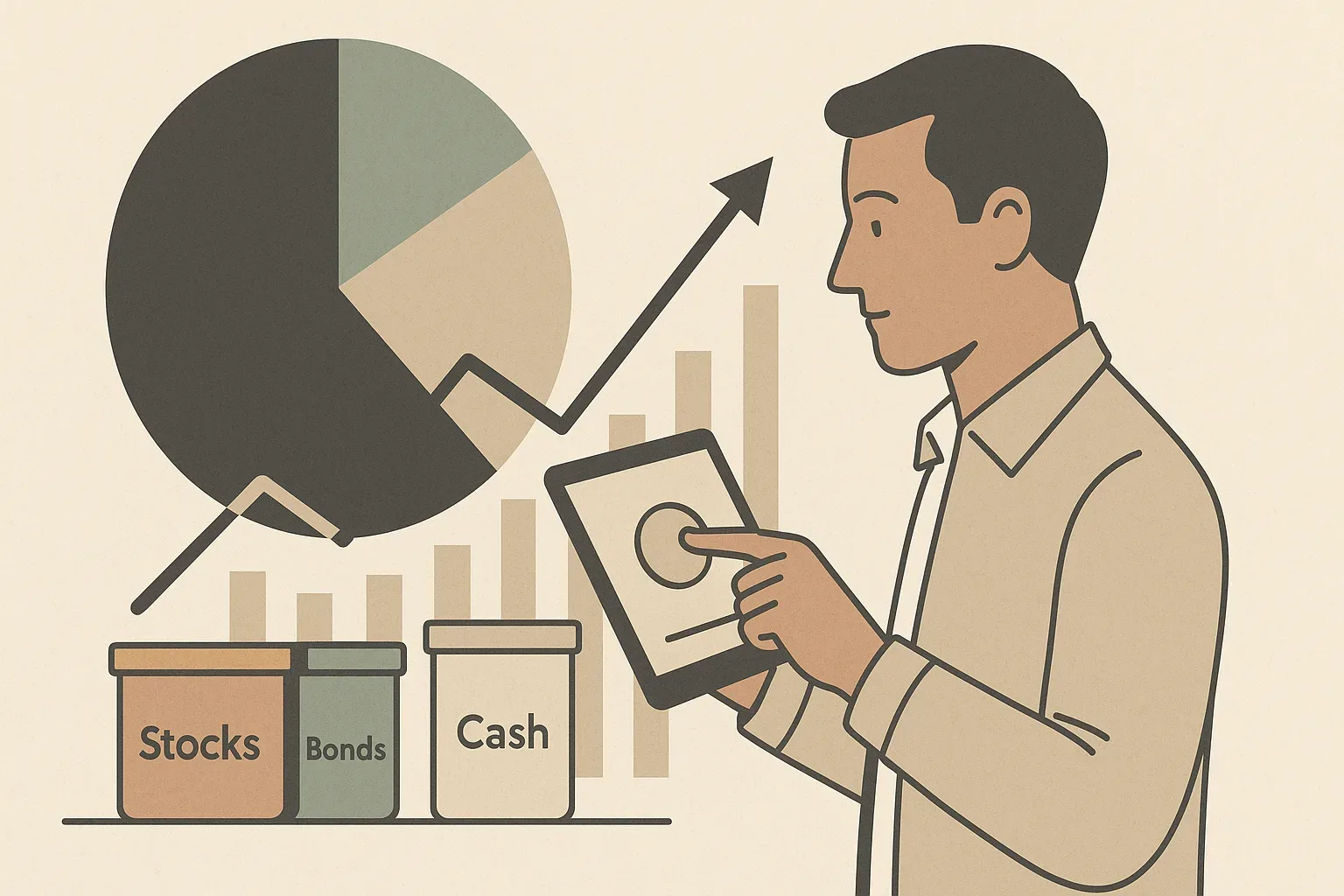
Rebalancing an index fund portfolio means adjusting the asset allocation back to its original or target percentages. Over time, different asset classes within your portfolio perform differently. For example, if your target allocation is 60% stocks and 40% bonds, and stocks have a particularly strong year while bonds are flat, your portfolio might naturally shift to 70% stocks and 30% bonds. This drift means your portfolio has become riskier than you initially intended. Rebalancing involves selling some of the outperforming assets (stocks in this example) and buying more of the underperforming assets (bonds) to restore the 60/40 balance. This disciplined approach serves several critical functions for the long term investor: it manages risk, helps to realize gains from overperforming assets, and often forces you to buy low and sell high, albeit automatically and without emotional intervention.
What exactly is index fund rebalancing and why is it critical for achieving long term investment goals?
Index fund rebalancing is the systematic process of realigning your investment portfolio to your predetermined target asset allocation. It typically involves selling portions of assets that have grown to represent a larger percentage of your portfolio than desired and using those proceeds to buy assets that have fallen below their target percentage. As asset classes fluctuate, an unmanaged portfolio can inadvertently become overweighted in higher-risk assets, exposing you to greater volatility than you are comfortable with or can afford.
Choosing Your Rebalancing Strategy: Time-Based vs. Threshold-Based Approaches
Time-based rebalancing involves setting a fixed schedule for reviewing and adjusting your portfolio, such as annually or semi-annually. This method offers simplicity and predictability. You mark a date on your calendar, say January 1st or your birthday, and regardless of market conditions, you review your allocation and make the necessary adjustments. Its main advantages are consistency and ease of implementation, reducing the temptation for market timing. You set specific percentage thresholds for how much an asset class can deviate from its target allocation before a rebalance is triggered. For instance, you might decide to rebalance if your stock allocation drifts more than 5% or 10% above or below its target. This strategy is more responsive to market movements and can prevent significant risk exposure due to market drift. However, it requires more frequent monitoring and might lead to more frequent transactions, potentially incurring higher costs or taxes, especially in volatile markets.
How do I determine the best frequency or trigger for rebalancing my index fund portfolio?
It is simple to remember, minimizes transaction costs, and allows enough time for market trends to develop without overreacting to short term fluctuations. For example, if your target is 60% stocks, you would rebalance if stocks hit 65% or 55%.
A Practical step by step Guide to Rebalancing Your Index Fund Portfolio
First, establish your target asset allocation. This allocation should reflect your long term goals, risk tolerance, and investment horizon. Second, assess your current asset allocation. Log into your brokerage accounts or investment platforms and calculate the current percentage each asset class represents in your total portfolio. Compare these current percentages to your target percentages to identify any deviations. Third, identify which assets need to be bought and sold. If an asset class has grown beyond its target, you will need to sell some of it. If an asset class has shrunk below its target, you will need to buy more of it. Fourth, execute the trades. This is where you actually make the sales and purchases. If sales are necessary, start with assets held in tax-advantaged accounts where capital gains taxes are deferred.
What are the practical steps involved in rebalancing an index fund portfolio effectively?
Without this, you cannot know what to rebalance to. Use your brokerage statements or online portfolio trackers to see how market movements have shifted your percentages. Many online platforms offer tools that visualize your current allocation against your target. Pinpoint which asset classes have become overweighted (grown beyond their target) and which are underweighted (shrunk below their target). For instance, if stocks are now 75% and bonds 25%, you would need to reduce stocks and increase bonds. For example, if bonds are low, send your next contribution specifically to your bond index fund. If this isn't enough, consider selling assets in tax-advantaged accounts (like IRAs or 401(k)s) first, as sales here do not trigger immediate capital gains taxes. Only then consider selling appreciated assets in taxable accounts, possibly implementing tax-loss harvesting if available. The final practical step is to confirm and record your rebalance. After making trades, verify that your portfolio now reflects your target allocation and keep records of all transactions for future reference and tax reporting. This systematic process ensures your portfolio consistently works towards your long term objectives.
Maximizing Tax Efficiency: Rebalancing Strategies for Different Account Types
The strategy differs considerably between tax-advantaged accounts and taxable brokerage accounts. You can freely sell overperforming assets and buy underperforming ones without worrying about the tax implications in the current year. This makes tax-advantaged accounts the ideal place to perform primary rebalancing activities. For taxable accounts, the approach must be more nuanced. Selling an appreciated asset (one you've held for over a year with a gain) will incur long term capital gains taxes, while selling an asset held for less than a year will incur short term capital gains, typically taxed at higher ordinary income rates. To maximize tax efficiency, prioritize using new contributions or re-invested dividends to purchase underweighted assets. This allows you to rebalance without selling anything. If sales are unavoidable, look for opportunities to tax-loss harvest. This involves selling assets that have declined in value (at a loss) to offset capital gains and potentially up to $3,000 of ordinary income. However, be mindful of the wash-sale rule, which prevents you from buying a substantially identical security within 30 days before or after selling it at a loss. If you must sell an appreciated asset, consider selling long term holdings first, as long term capital gains rates are generally lower than short term rates. Strategically combining these methods across your different account types can significantly reduce your tax liability while maintaining your desired asset allocation.
How can I rebalance my index funds in a tax-efficient manner, especially in taxable accounts?
To rebalance your index funds in a truly tax-efficient manner, especially within taxable accounts, a thoughtful and multi-pronged approach is essential. The cornerstone of tax-efficient rebalancing is to prioritize your tax-advantaged accounts first. In accounts like IRAs, 401(k)s, and Roth IRAs, you can sell assets that have grown too large and buy those that have lagged without incurring any immediate capital gains taxes. This freedom allows you to make significant adjustments with no tax friction. Once your tax-advantaged accounts are properly allocated, turn your attention to your taxable accounts. Here, the primary strategy to minimize taxes is to use new contributions and reinvested dividends. Instead of selling assets, direct your regular contributions or any dividends paid out by your funds towards the asset classes that are currently underweighted. For example, if your bond allocation is too low, direct your next monthly contribution entirely to your bond index fund. If selling is necessary in a taxable account, look for tax-loss harvesting opportunities. If any of your index funds have declined in value, selling them at a loss can offset capital gains elsewhere in your portfolio, and potentially up to $3,000 of ordinary income annually. Always be aware of the wash-sale rule, which prevents buying a "substantially identical" security within 30 days before or after selling it for a loss. If you must sell an asset at a gain, always sell long term holdings first, as long term capital gains are taxed at more favorable rates than short term gains. You might also consider selling assets that have appreciated minimally or are closer to their cost basis to reduce the taxable gain. By strategically combining these tactics, you can maintain your portfolio's risk profile while minimizing your current tax obligations.
Leveraging Automation and Tools for Seamless Portfolio Rebalancing
The advent of financial technology has significantly simplified the process of portfolio management, including rebalancing. Leveraging automation and various digital tools can make rebalancing your index fund portfolio seamless, efficient, and less prone to emotional pitfalls. Platforms like Betterment, Wealthfront, Vanguard Digital Advisor, Fidelity Go, and Schwab Intelligent Portfolios offer automated rebalancing services as a core feature. Once you set your target allocation, these services continuously monitor your portfolio and automatically execute trades to bring it back into line when it drifts beyond a specified threshold. This approach removes the guesswork and emotional burden from the investor, ensuring consistent adherence to your investment strategy. Many traditional brokerage firms also offer sophisticated tools. While some may not provide full automation, they often have user friendly interfaces that show your current allocation versus your target and suggest trades needed to rebalance. Some even offer a "one-click" rebalance feature. For those who prefer a more hands-on approach, spreadsheet software combined with online portfolio tracking tools can still be effective. You can export your holdings data, plug it into a spreadsheet with your target allocation, and calculate the exact buys and sells required. While this requires manual execution, it offers maximum control and understanding of each transaction. The choice of tool depends on your comfort with automation, your desire for control, and the complexity of your portfolio. The goal is always to reduce friction and ensure rebalancing occurs as planned, consistently.
Are there any digital tools or automated services that can simplify the rebalancing process for me?
Yes, absolutely. A growing number of digital tools and automated services are specifically designed to simplify and streamline the rebalancing process for index fund investors. These tools can significantly reduce the time, effort, and emotional decision-making typically associated with portfolio adjustments. Robo-advisors are arguably the most prominent solution. Platforms such as Betterment, Wealthfront, Vanguard Digital Advisor, Schwab Intelligent Portfolios, and Fidelity Go automate the entire rebalancing process. Once you establish your initial risk profile and asset allocation, these services continuously monitor your portfolio's drift and automatically execute trades to bring it back into alignment when it exceeds a predefined threshold. They handle the buying and selling, often in a tax-efficient manner, including features like tax-loss harvesting. This hands-off approach is ideal for investors who prefer minimal involvement. Many online brokerages also offer increasingly sophisticated tools within their platforms. While not always fully automated, these tools often provide a clear visual comparison of your current asset allocation versus your target and will calculate the specific trades (shares to buy or sell) needed to rebalance. Some even offer a "one-click" rebalance feature that bundles all the necessary transactions. For those who prefer a more DIY approach but want assistance with calculations, portfolio analysis software or even advanced spreadsheet templates can help. These tools allow you to input your holdings and target allocations, and they will tell you exactly what adjustments are required. While the execution remains manual, the analytical burden is reduced. The overarching benefit of these digital solutions is their ability to enforce discipline and ensure your rebalancing strategy is executed consistently, regardless of market volatility or personal emotions.
Common Pitfalls to Avoid When Rebalancing Index Funds
While rebalancing is a powerful tool, it's not without potential pitfalls that can hinder its effectiveness. One common mistake is over-rebalancing. These small costs can erode long term returns. Another pitfall is emotional rebalancing. Panicking during a market downturn and selling underperforming assets, or aggressively buying into an already overperforming sector, goes against the disciplined nature of rebalancing. The goal is to stick to your predetermined plan, not react to short term market noise. Ignoring tax implications is a significant error, particularly in taxable accounts. Carelessly selling appreciated assets without considering capital gains taxes can negate much of the benefit of the rebalance. Always prioritize tax-advantaged accounts or use new contributions for rebalancing in taxable accounts. Without a defined target allocation, a chosen strategy (time-based or threshold-based), and an understanding of your account priorities, rebalancing becomes haphazard and ineffective. Finally, forgetting the 'why' of rebalancing – maintaining risk alignment and working towards long term goals – can lead investors astray. Rebalancing is a strategic maneuver, not a way to chase short term gains. Avoiding these common mistakes will ensure your rebalancing efforts consistently support your long term investment success.
MoneyAmped publishes educational analysis. Nothing here is financial advice; verify product terms, fees and regulatory status independently before acting.